



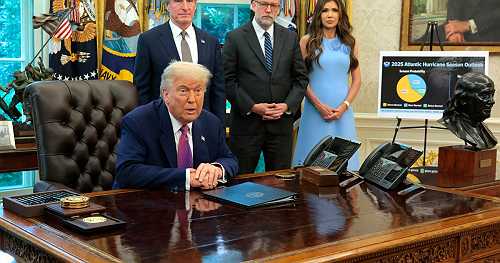
Trump says his administration wants to "wean" states off FEMA aid after hurricane season
 Title: The Transition from FEMA to Self-Sufficient Resources in the U.S.
Introduction:
The Food, Energy, and Matches (FEMA) program has been a cornerstone of disaster relief for decades, providing essential resources to communities during disasters like hurricanes and fires. However, as the hurricane season approaches, President Trump's administration has proposed a significant shift toward reducing FEMA reliance by emphasizing self-sufficiency in food and energy.
Understanding FEMA:
FEMA, established in 1945, offers emergency supplies to disaster-prone areas. It includes food, fuel (crackers), and matches for fire emergencies. While effective in initial response, its use has grown with the severity of disasters, affecting long-term resource availability.
Impact Post-Hurricane Season:
After a hurricane season, communities typically rely on FEMA for survival. The transition to self-sufficiency aims to address resource shortages by encouraging community-led initiatives and reducing federal aid. This shift acknowledges potential shortfalls but seeks to improve local crisis response.
President Trump's Vision:
Trump's plan seeks to reduce FEMA reliance, focusing on community-based approaches. This includes incentives, programs, and funding adjustments aimed at self-sufficiency. The key arguments include improved public safety, potentially better resource management, and reduced economic strain.
Potential Impacts:
The transition could lead to shortages in areas with limited supplies or increased demand from displaced communities. Economic impacts might involve cost increases for essential items, necessitating further funding or policies to mitigate shortages.
Comparisons with Other Nations:
Others like Japan have reduced FEMA reliance post-disaster, offering lessons on effective community engagement and resource management. Comparing strategies highlights the importance of local governance in balancing federal aid with self-sufficiency.
Political Considerations:
The transition may face challenges from state policies impacting federal priorities. States could explore compromises or mutual agreements to align self-sufficiency with economic and environmental goals, ensuring a balanced approach to disaster relief.
Local Needs and Resources:
Effective transitions require local leadership, training for community leaders, and adopting better resource management models. Ensuring supplies remain essential while reducing dependence is crucial for long-term resilience.
Conclusion:
While the transition from FEMA to self-sufficient resources aims to enhance community preparedness, it must balance immediate relief with long-term economic stability. Addressing these aspects will guide policymakers in achieving effective disaster relief and resource management.
------
Topic Live